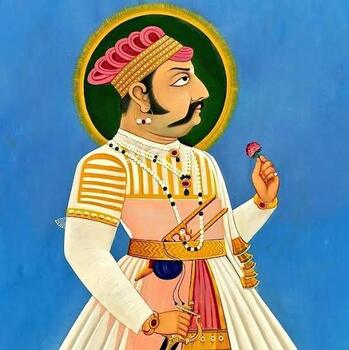
Rana Kumbha, also known as Maharana Kumbhakarna, was a prominent ruler of Mewar in present-day Rajasthan, India. His reign, which spanned from 1433 to 1468, is remembered as a period of remarkable valor, strategic prowess, and cultural renaissance. Born in 1433, Rana Kumbha ascended to the throne at a young age following the death of his father Rana Mokal. Despite his youth, he quickly established himself as a fierce and capable leader, earning a reputation for his military acumen and administrative skills.
The origins of Rana Kumbha can be traced back to the iconic Sisodia dynasty, which had ruled over the region of Mewar for centuries. The Sisodias were known for their resilience and steadfast commitment to their homeland, and Rana Kumbha was no exception. He took forward the legacy of his ancestors, fiercely defending Mewar against external threats and expanding its territories through a series of successful military campaigns. Under his rule, Mewar witnessed a period of unprecedented prosperity and cultural flourishing.
One of the most enduring legacies of Rana Kumbha is the architectural marvels he built during his reign. The Chittor Fort, one of the largest forts in India, stands as a testament to his vision and grandeur. Rana Kumbha was not only a skilled warrior but also a patron of the arts and culture. He commissioned the construction of numerous temples and palaces, many of which still stand today as a testament to his patronage.
Rana Kumbha's rule was not without challenges, however. He faced numerous invasions from rival kingdoms, most notably the sultanates of Malwa and Gujarat. Despite these threats, Rana Kumbha managed to repel his enemies and maintain the sovereignty of Mewar. His victory over Mahmud Khalji of Malwa in the Battle of Mandalgarh in 1440 is especially noteworthy, showcasing his strategic brilliance and military prowess.
In addition to his military achievements, Rana Kumbha was also known for his religious tolerance and inclusive governance. He respected the diversity of his subjects and promoted harmony among people of different faiths. His reign saw the flourishing of art, literature, and music, with poets and scholars finding patronage at his court. Rana Kumbha's commitment to fostering a culture of inclusivity and pluralism set him apart as a leader ahead of his time.
Tragically, Rana Kumbha's life was cut short in 1468 when he was assassinated by his own son, Uday Singh. Despite the abrupt end to his reign, Rana Kumbha's legacy endured through the centuries, inspiring generations of rulers and leaders in Mewar and beyond. His contributions to the political, cultural, and architectural landscape of Rajasthan remain a source of pride for the people of the region.
In conclusion, Rana Kumbha stands out as a towering figure in Indian history, revered for his courage, leadership, and commitment to his people. His impressive military victories, architectural achievements, and inclusive governance set him apart as a visionary ruler who left an indelible mark on the history of Mewar. Today, his legacy continues to be celebrated as a symbol of resilience, creativity, and statesmanship.

