Showing posts with label kingdom. Show all posts

Sunday, 21 July 2024

Indian Rulers Against the British Army: A Struggle for Sovereignty


The struggle for independence in India was marked by numerous conflicts and resistance movements against the British colonial forces. The Indian rulers, comprising maharajas, nawabs, and various regional chieftains, played a crucial role in opposing British expansionism and asserting their authority over their territories. This article delves into some notable Indian rulers who stood against the British army, their motivations, and the significance of their resistance.

By the early 18th century, the decline of the Mughal Empire created a power vacuum in India, enabling various regional rulers to emerge. The British East India Company capitalized on this fragmentation to further its territorial ambitions, systematically annexing princely states through a mixture of diplomacy, warfare, and coercion. The imposition of treaties that favored the British and undermined local sovereignty incensed these rulers, paving the way for armed resistance.

One of the most iconic figures in the fight against British rule was Rani Lakshmibai of Jhansi. During the upheaval of the 1857 Revolt, often referred to as the First War of Indian Independence, Rani Lakshmibai emerged as a formidable leader. After the British attempted to annex her territory under the pretext of the Doctrine of Lapse, she became a symbol of resistance. Despite being outmatched, she skilled in military tactics and led her troops valiantly until her death in 1858. Her bravery inspired countless others to rise against the British, cementing her legacy as a national heroine.

Nawab Wajid Ali Shah of Awadh was another crucial figure in the rebellion against British rule. Initially seen as a puppet ruler, his extravagant lifestyle and lack of political foresight led to discontent among his subjects. However, when the British deposed him under false pretenses, it ignited widespread unrest. The Nawab's soldiers and civilian supporters joined forces in the 1857 uprising, rallying around the cry for self-rule and justice. His commitment to fighting British imperial aggression illustrated the deep-seated resentment that many Indian rulers felt toward colonial domination.

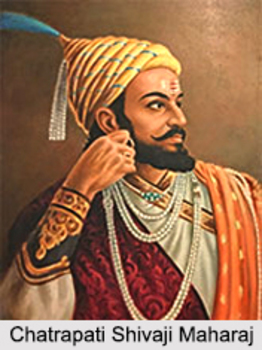
Before the 1857 revolt, the Maratha Confederacy had established a significant challenge to British hegemony. Notable leaders such as Chhatrapati Shivaji Maharaj and later figures like Bajirao II fought hard against British encroachment. While the British eventually subdued the Marathas in the early 19th century, their initial resistance exemplified the intense desire for sovereignty. The Maratha legacy of guerrilla warfare and unity against a common foe left an indelible mark in the annals of anti-colonial struggle.

In addition to these prominent figures, several regional leaders engaged in resistance activities throughout India, including the Sikhs under Maharaja Ranjit Singh, and the myriad princely states that resisted British control through various means—from diplomacy to armed rebellion. Their efforts, although often localized, collectively contributed to a growing narrative of national identity and resistance.

The Indian rulers’ resistance against the British army was not merely a struggle for territorial integrity but a broader quest for self-determination and dignity. Their valor and sacrifices laid the groundwork for the eventual Indian independence movement. While the British may have succeeded in subjugating these rulers in the short term, the spirit of rebellion they ignited continued to inspire generations, ultimately culminating in India gaining independence in 1947. The legacy of these rulers remains a testament to the resilience of India's diverse fabric and the enduring fight for freedom.



Thursday, 11 July 2024

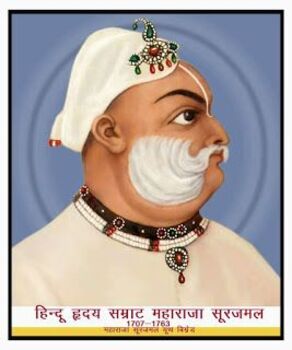
 Suraj Mal: Architect of Bharatpur's Golden Age

Suraj Mal, the son of the renowned Rajput ruler Badan Singh, is remembered as a visionary leader who continued his father's legacy and played a pivotal role in shaping the history of northern India during the 18th century. Born in 1707 in the princely state of Bharatpur, Suraj Mal inherited his father's courage, strategic acumen, and dedication to the welfare of his people, leading to his remarkable rise to power and lasting impact on the region.

Suraj Mal grew up in the vibrant and bustling court of Bharatpur, where he was exposed to the intricacies of governance, diplomacy, and warfare from a young age. Under the tutelage of his father, Badan Singh, he received a comprehensive education that included military training, political strategy, and administration, preparing him to shoulder the responsibilities of leadership with grace and wisdom.

As he matured, Suraj Mal demonstrated a keen intellect, a fierce determination, and a compassionate heart, qualities that would define his reign as the ruler of Bharatpur. His ability to inspire loyalty and unity among his subjects set him apart as a leader who truly cared for the welfare and prosperity of his people.

Upon the death of his father in 1756, Suraj Mal ascended to the throne of Bharatpur and immediately set about consolidating his power and expanding his influence in the region. Drawing upon the lessons he had learned from his father and the alliances he had forged, Suraj Mal launched a series of successful military campaigns that further cemented Bharatpur's position as a major power in northern India.

Suraj Mal's strategic brilliance and military prowess were on full display during his reign, as he successfully defended Bharatpur against external threats and expanded its territory through a combination of conquest and diplomacy. His ability to balance pragmatism with idealism, strength with compassion, earned him the admiration and respect of his subjects and adversaries alike.

Suraj Mal's legacy as a visionary leader and builder of the Bharatpur state endures to this day, reflecting his enduring impact on the history and culture of India. Under his enlightened rule, Bharatpur flourished as a center of art, culture, and commerce, attracting scholars, artists, and traders from far and wide.

Perhaps Suraj Mal's most enduring legacy was the architectural marvel of the Lohagarh Fort, a formidable structure that epitomized the strength and resilience of the Bharatpur state. Built using indigenous techniques and materials, the fort stood as a testament to Suraj Mal's commitment to preserving the cultural heritage and identity of his people.

In conclusion, Suraj Mal's life and achievements exemplify the qualities of a visionary leader who led by example, inspired by compassion, and governed with wisdom. His contributions to the history of India, particularly in the realm of state-building and governance, continue to be studied and admired by historians and scholars around the world.

Suraj Mal's story serves as a reminder of the transformative power of leadership, the enduring legacy of dedication to one's people, and the profound impact that individuals can have on the course of history. As we reflect on his remarkable life and legacy, we are inspired to emulate his virtues of courage, vision, and compassion in our own pursuits and endeavors.


Saturday, 6 July 2024

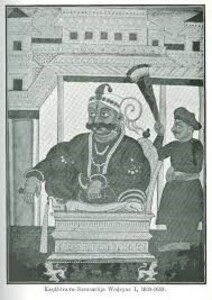
Sriranga III: The Illustrious Vijayanagara King


Sriranga III, also known as Ranga Raya III, was a prominent ruler of the Vijayanagara Empire, reigning during a critical phase in its history. His rule spanned from 1592 to 1614 CE, marking a period of both challenges and accomplishments for the empire.

Sriranga III ascended the throne during a turbulent time when the Vijayanagara Empire was grappling with external invasions and internal strife. His reign followed the decline that began after the catastrophic Battle of Talikota in 1565, which significantly weakened Vijayanagara's influence in the Deccan region.

Despite these challenges, Sriranga III is remembered for his efforts to stabilize the empire and restore its former glory. He sought alliances with various regional powers to counter the growing influence of the Deccan Sultanates and other rival kingdoms. His diplomatic acumen helped to temporarily consolidate Vijayanagara's territories and maintain a semblance of authority in the face of external threats. Culturally, Sriranga III continued to patronize the arts and literature, contributing to the vibrant cultural milieu of Vijayanagara. His court attracted scholars, poets, and artists, fostering a renaissance of sorts amidst the geopolitical turmoil. Architectural endeavors also flourished under his reign, with several temples and monuments receiving royal patronage and embellishment.

However, Sriranga III's reign ultimately ended with his tragic demise in 1614, marking a poignant chapter in Vijayanagara's history. His death was followed by further instability and the eventual disintegration of the empire, culminating in the fall of Hampi, the imperial capital, in 1646.

Today, Sriranga III is remembered as a ruler who navigated challenging times with resilience and foresight, striving to uphold the legacy of Vijayanagara amidst formidable odds. His contributions to diplomacy, culture, and architecture continue to be studied and admired, shedding light on a pivotal era in South Indian history marked by both grandeur and adversity.