Showing posts with label fredeom. Show all posts

Sunday, 2 February 2025

Sita Devi: A Revolutionary Patriot in India's Freedom Struggle

Sita Devi, born in 1910 to Acharya Ramdev and Vidyadhari, emerged as a formidable figure in India's fight against British colonial rule. Her father, a prominent leader of the Arya Samaj and a staunch advocate for women's education, instilled in her a deep sense of patriotism and the importance of social reform. This upbringing laid the foundation for Sita Devi's unwavering commitment to India's independence.

Her academic achievements were notable; she secured a Visharad in Sanskrit, equivalent to a Master's degree, and worked as a lecturer at Dev Samaj College in Lahore. However, her passion for freedom called her away from academia. Sita Devi resigned her teaching position when she was elected to the Legislative Assembly, marking her transition from education to active politics. Her marriage to Chabilidas, a young revolutionary and educator at the National College, further fueled her dedication to the freedom struggle. The college was a breeding ground for revolutionary ideas, nurturing future leaders like Bhagat Singh and Sukhdev.

Sita Devi's activism was marked by her relentless efforts to enlighten the masses about their rights and the importance of self-governance. She believed that the liberation of India was not just a political necessity but a moral imperative. Her participation in various movements often led to imprisonment, yet she remained undeterred, viewing her sacrifices as essential for the greater cause of independence.

Through her life, Sita Devi exemplified the spirit of patriotism and resilience. Her contributions to the freedom struggle highlight the critical role women played in India's fight against colonialism. As we reflect on her legacy, we remember her as a beacon of hope and a symbol of the collective effort that ultimately led to India's independence.

Tuesday, 28 January 2025

Nellie Sengupta: A Beacon of Patriotism and Dedication

Nellie Sengupta, born on January 12, 1886, emerged as an embodiment of patriotism and selflessness in the Indian independence movement. The daughter of Frederick William Gray and Edith Heneriata Gray, she left her native England to journey to India, where she dedicated her life to the cause of freedom from British colonial rule. Marrying Jatindra Mohan Sengupta, a fervent Indian patriot, she adapted her life to embrace a new culture, politically and personally aligning herself with her husband's mission.

Nellie's commitment to her husband's fight for independence exemplified her extraordinary character. While she inherited the values of her upbringing, she seamlessly integrated the noble traditions of Indian culture, embodying the sacrificial spirit synonymous with the region. This synthesis of qualities positioned her as not only a devoted wife and mother but also as an active political participant during a pivotal time in history. Her life reflected the ideals of the nineteenth-century renaissance, where women began to play crucial roles in socio-political movements.

Her transition into Indian life was met with doubt from her in-laws regarding her ability to adapt to the intricacies of a joint family structure. However, Nellie’s quick assimilation and her unwavering support for her husband dispelled any skepticism. Her father-in-law even lauded her as a "prize addition" to the family, an acknowledgment of her remarkable ability to bridge two cultures while contributing significantly to the cause. Notably, her partnership with Jatindra was marked by mutual respect and collaboration; without her encouragement and backing, his prominence in the political arena might have been unattainable.

Nellie Sengupta’s legacy is one of profound patriotism and devotion. She not only stood alongside distinguished leaders like Mahatma Gandhi and Sarojini Naidu but also became an exemplar of the spirit of independence. Her life story is a testament to the crucial role of women in the freedom struggle, highlighting that dedication transcends cultural boundaries and that the true essence of patriotism often lies in selfless service to society.

Sunday, 20 October 2024

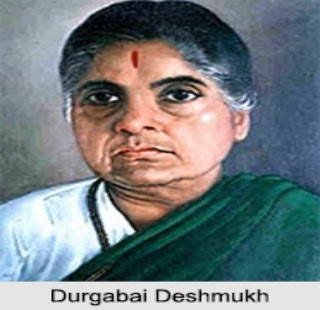
Durgabai Deshmukh: A Trailblazer in Social Reform and Women's Empowerment


Durgabai Deshmukh was a remarkable Indian social reformer, freedom fighter, and advocate for women’s rights whose contributions spanned multiple fields, including education, law, and social welfare. Born on July 15, 1909, in a traditional family in Andhra Pradesh, Deshmukh emerged as a prominent figure in India’s struggle for independence and the fight for social justice, particularly for women.

From a young age, Durgabai displayed a strong inclination towards education and social issues. She completed her schooling in Madras (now Chennai) and went on to earn her law degree from the University of Madras in 1936. At a time when few women pursued higher education, her academic achievements were groundbreaking. She was determined to use her education to uplift marginalized communities, particularly women, who faced systemic discrimination.

Deshmukh’s career took off as she became actively involved in the Indian freedom movement. She joined the Indian National Congress and was an ardent supporter of Mahatma Gandhi's principles of non-violence and civil disobedience. Her commitment to the cause was unwavering, and she participated in various movements, including the Quit India Movement in 1942, which marked a pivotal moment in the struggle for independence.

As India gained independence in 1947, Deshmukh recognized the need for a focused effort on social reform, especially regarding women’s rights. She was deeply aware of the challenges women faced in a rapidly changing society, including illiteracy, poverty, and lack of access to healthcare. In response, she founded the Andhra Mahila Sabha in 1937, an organization aimed at empowering women through education, vocational training, and legal rights. This initiative became a model for women’s empowerment in India and played a crucial role in advocating for women's rights at a national level.

Durgabai Deshmukh's influence extended into the political realm as well. She served as a member of the Constituent Assembly of India, where she worked tirelessly to ensure that the new constitution enshrined fundamental rights for all citizens, particularly women. Her advocacy was instrumental in securing provisions for women's education, labor rights, and equal pay. She was a vocal proponent of the Hindu Code Bill, which sought to reform laws concerning marriage, divorce, and inheritance, aiming to provide women with greater autonomy and rights within the family structure.

In addition to her legislative efforts, Deshmukh was a pioneer in social welfare. She played a vital role in establishing the National Council of Women in India, which aimed to address women’s issues at the national level. Her commitment to social justice also led her to work in the fields of healthcare and education, establishing schools and clinics that provided essential services to underprivileged communities.

Durgabai's contributions were recognized through various awards and honors throughout her life. She was awarded the Padma Bhushan in 1956 for her distinguished service to the nation. Her legacy continues to inspire countless individuals engaged in social reform and women’s rights advocacy.

In summary, Durgabai Deshmukh was a formidable force in the fight for women's empowerment and social justice in India. Her career, marked by unwavering commitment and tireless activism, laid the foundation for significant advancements in women's rights and social reform in the country. Today, her work serves as a reminder of the critical importance of education, advocacy, and community engagement in driving social change. Durgabai Deshmukh remains an enduring symbol of courage and determination, inspiring generations to continue the struggle for equality and justice.Top of FormBottom of Form